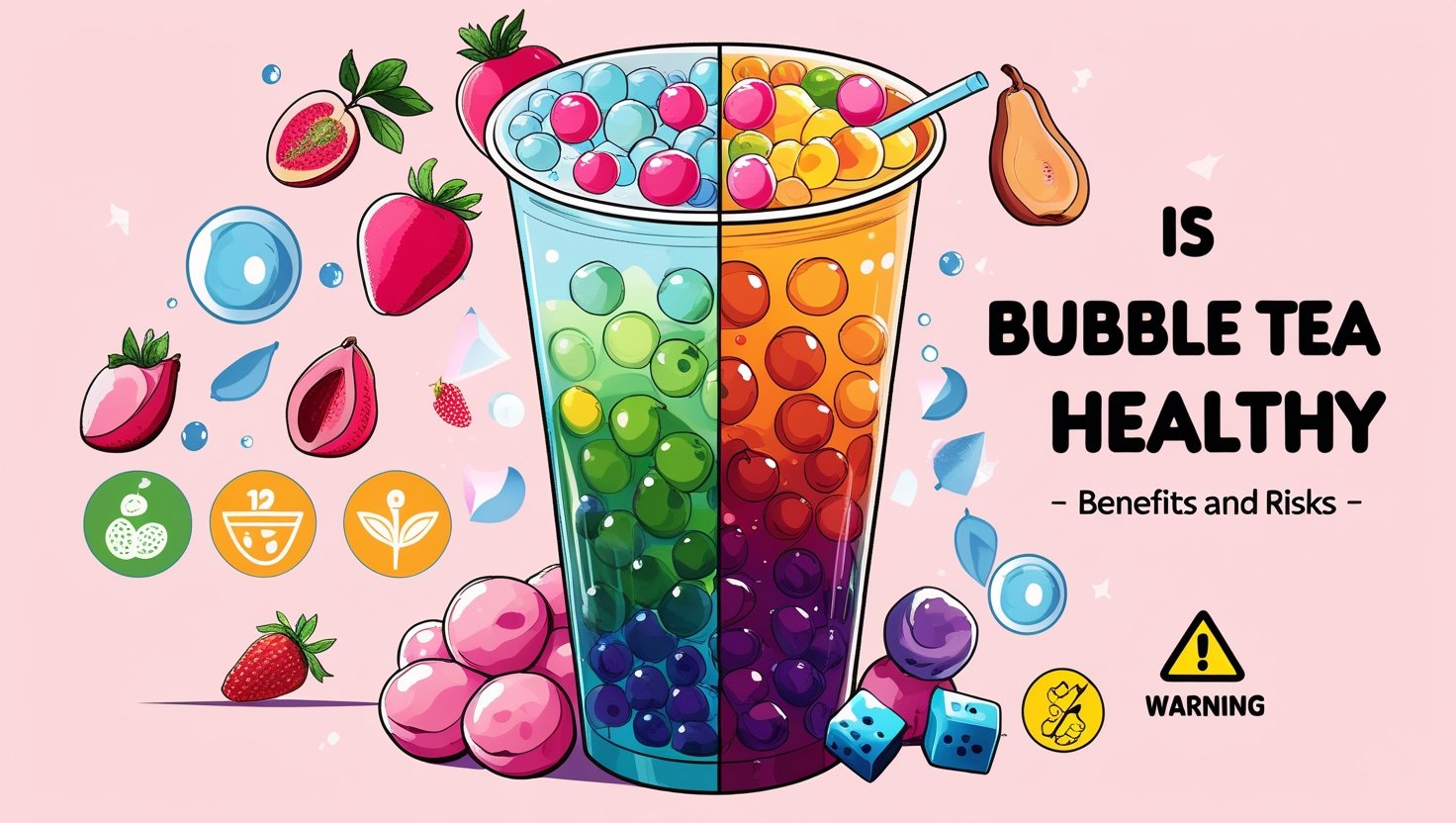
Let me tell you about my first bubble tea experience. I was in college, and a friend dragged me to a small shop and ordered me a strange-looking drink. It had black balls at the bottom, a comically wide straw, and was so sweet it made my head spin. My first thought was, “What is this nonsense?” Then I took a second sip. And a third. For the next two months, I was hooked. But one day, I felt a stomach ache coming on, and a thought struck me: maybe this isn’t good for me. I started wondering, “What exactly is in this colorful drink?” I began asking vendors, reading ingredient lists, and what I discovered is what I want to share with you. Bubble tea isn’t just a trend; it’s a game of choices with your health. Let’s pull back the curtain and see what’s really in that cup.
Breaking Down the Bubble Tea Mystery:
Let’s pop this bubble open and look at what’s really inside. Most people don’t realize there are four separate components to your drink, and each one comes with its own health considerations.
The foundation is the tea itself. If we stopped here, we’d be golden. Properly brewed green or black tea contains those famous antioxidants everyone talks about. These are the good guys that help your body fight inflammation and cellular damage. But let’s be honest, nobody orders plain tea at a bubble tea shop.
Then comes the milk or creamer. This is where things get shady. Many places use powdered non-dairy creamer because it’s cheap and doesn’t spoil. What they don’t tell you is that this stuff often contains hydrogenated oils, the same trans fats that doctors warn us about for heart health. It’s like they took something potentially healthy and added the nutritional equivalent of a tire fire.
Now let’s talk about those iconic tapioca pearls. Here’s the uncomfortable truth: they’re essentially little balls of starch that have been boiled in sugar syrup. They’re pure carbohydrates with minimal nutritional value, no protein, no fiber, just empty calories waiting to wreak havoc on your blood sugar levels. Your digestive system often doesn’t know what to do with them, which explains why so many people experience that distinctive bubble tea bloat.
The final component is the sweetener, and this is the real nightmare. The default sugar level in most bubble teas is astronomical. We’re talking 50-70 grams of sugar in a single serving. To put that in perspective, the World Health Organization recommends less than 25 grams of added sugar per day. You’re drinking triple your daily recommended sugar in five minutes flat.
What This Means For Your Body:
When you drink a standard bubble tea, your body goes through something like a nutritional horror movie. That massive sugar hit causes an immediate blood sugar spike that would make a diabetic nervous. Your pancreas freaks out and produces insulin to manage the sudden glucose invasion, often overcompensating and leading to the dreaded sugar crash an hour later, that familiar fatigue, irritability, and craving for more sugar.
The combination of simple carbohydrates from the tapioca pearls and all that added sugar creates a calorie bomb that can easily reach 400-500 calories. That’s equivalent to a proper meal but without any of the nutritional benefits. If you’re having one of these regularly instead of actual food, you’re essentially consuming empty calories that will likely lead to weight gain over time.
Then there’s the digestive drama. Those tapioca pearls aren’t exactly gut-friendly. For many people, they sit in the stomach like little cement balls, causing bloating, discomfort, and digestive issues. It’s like your body is saying, “What am I supposed to do with this?”
How to Order Without Betraying Your Body:
Now for the good news, you don’t have to give up bubble tea completely. You just need to become a smarter orderer. Here’s your battle plan for the next time you’re at the counter:
First, choose your base wisely. Stick to plain green, black, or oolong tea. Avoid the fancy pre-flavored options like taro or matcha powder, these are usually just sugar delivery systems in disguise.
When it comes to milk, always ask for fresh milk or unsweetened plant-based alternatives like almond or oat milk. Specifically say “no non-dairy creamer.” This single choice eliminates those unhealthy trans fats from your drink.
The sugar level is your most powerful weapon. Be brave and ask for 25% sweetness or less. Your taste buds will adapt surprisingly quickly, and you’ll start actually tasting the tea rather than just sugar. If you’re feeling really bold, try it with no added sugar, you might be surprised.
Rethink your toppings entirely. Instead of traditional tapioca pearls, consider healthier options like chia seeds (which provide fiber and omega-3s), aloe vera (soothing and hydrating), or grass jelly (low in calories). If you must have pearls, ask for half the normal amount.
Finally, practice portion control. Order the smallest size available and treat bubble tea as an occasional dessert rather than a regular beverage. Your body will thank you later.
The Bottom Line:
At the end of the day, bubble tea in its standard form is essentially a dessert masquerading as a drink. But with some careful customization and realistic expectations, you can still enjoy it without completely abandoning your health goals.
The power is in your choices, specifically your willingness to reduce sugar, avoid questionable creamers, and rethink those problematic pearls. What matters most is awareness. Now that you know what’s really in that cup, you can make decisions that let you enjoy the occasional bubble tea without the guilt or digestive consequences.
Remember: it’s not about perfection, it’s about progress. Your health journey doesn’t have to mean giving up everything you love, just learning how to enjoy them smarter.
FAQs:
1. What’s the healthiest part of bubble tea?
The unsweetened tea base contains beneficial antioxidants.
2. How much sugar is really in bubble tea?
A typical serving contains 50-70 grams of sugar.
3. Are tapioca pearls bad for you?
They’re pure carbohydrates cooked in sugar syrup, offering empty calories.
4. Can bubble tea cause weight gain?
Yes, the high sugar and calorie content can contribute to weight gain.
5. What’s the healthiest milk option?
Fresh milk or unsweetened plant-based alternatives like almond milk.
6. How can I make bubble tea healthier?
Reduce sugar to 25% or less, choose fresh milk, and skip tapioca pearls.