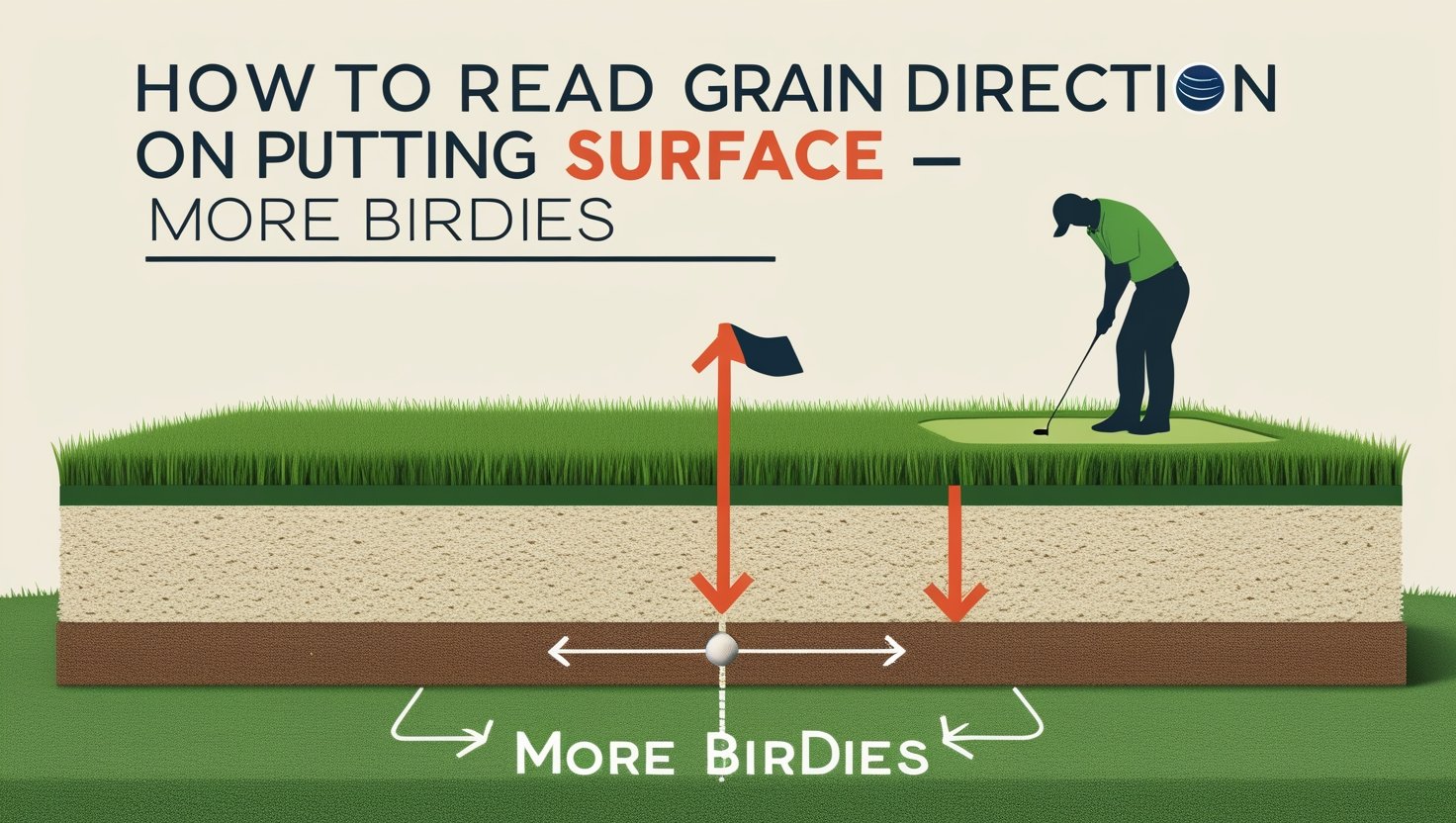
Imagine stepping onto the green with the confidence of a pro, your putts seem to flow effortlessly, and every stroke brings you closer to a flurry of birdies. What if the secret to unlocking this level of consistency lay in a subtle detail: the grain direction on your putting surfaces? In golf, small details make a big difference, and understanding how the grass grows can be the deciding factor between a missed tap and a game-winning putt. In this article, we dive deep into the art and science of reading grain direction, where every observation can lead to more birdies on your scorecard. Whether you’re a weekend warrior or an aspiring champion, mastering this skill will transform the way you read greens and elevate your overall game.
The Secret Signal of Grain Direction:
Every green holds a secret message, written in the very fibers of the grass. Grain direction refers to the orientation in which the grass blades naturally lie on a putting surface. This natural characteristic not only enhances the beauty of the course but also affects the behavior of your putt. When grass is mowed or naturally falls in a certain direction, it can either help your ball roll true or cause it to veer off course.
The direction of the grain influences the speed and break of your putt. For instance, when you putt with the grain, the ball tends to move faster, while putting against it can slow the ball down and cause a subtle break. Recognizing these patterns can give you crucial insights into how much force to apply and which line to choose. Many professional golfers study the green carefully before making their move, taking note of the sheen or darker patches that indicate the grain’s flow. By simply observing the texture and shine, you can grasp where the grass grows, and more importantly, how it will interact with your ball.
Understanding grain direction is about connecting with the environment. It’s a skill that goes beyond textbook techniques and taps into your ability to read your surroundings. As you spend more time on the course, you’ll notice how different areas of the same green might have varying directions based on factors like sun exposure or mowing patterns. Integrating this knowledge into your game plan will not only help you refine your putting strokes but also empower you to make more informed decisions, resulting in those coveted more birdies moments.
The Science Behind the Sheen:
To truly master grain direction, you first need to understand the science behind putting surfaces. The type of grass, how it is maintained, and even environmental conditions contribute to the unique characteristics of each green. Most modern courses use grasses such as Bermuda or bentgrass, each displaying distinct grain patterns and behaviors.
Grass blades are living parts of the plant, and their growth is influenced by natural forces like gravity, water distribution, and sunlight. When grass is cut or brushed by the morning dew, it forms a distinct sheen, a visual indicator of the grain’s direction. This sheen acts as a natural guide. A lighter, shinier surface often indicates that the grass is bending away from you, whereas darker, more textured areas can reveal where the blades are growing toward you. Recognizing these subtle clues on the putting surface is key to predicting how your ball will respond to various slopes and breaks.
The maintenance of a golf course also plays an important role. Groundskeepers carefully manage mowing patterns to ensure a smooth and consistent playing field. However, even with precision care, natural variations occur over the course of a day. Morning dew, wind direction, and even the sunlight angle can alter the appearance of the grass, making the grain direction shift or become more pronounced. By taking the time to observe these environmental effects, you can become more adept at reading the greens, transforming what might seem like a minor detail into a major competitive advantage.
Understanding these scientific nuances not only informs your putting strategy but also deepens your appreciation for the game. The next time you step on the green, take a moment to study how the light interacts with the grass, and you might just catch the secret signals that lead to more birdies.
Techniques for Reading the Grain:
Reading the grain on a green is both an art and a science, requiring keen observation and a practiced eye. There are several techniques golfers can use to discern the grain direction effectively. One of the most popular methods is to take a step back and view the green from a distance. When you view the putting surface from afar, the fine details become clearer, revealing the overall flow of the grass.
Another effective strategy is to examine the area around the hole. The border of the cup is often where the grain is most evident, especially if the grass is neatly trimmed. Look for variations in color and texture. Lighter patches often indicate grass growing away from you, while darker regions show the opposite. The contrast can serve as a natural map guiding the line and speed of your putt. For instance, if you notice that the area on one side of the hole is consistently lighter, it may suggest that the grain is moving in that direction, potentially increasing the putt’s speed on that flank.
A more tactile approach involves paying attention to the feel of the green underfoot. As you walk onto a green, let your senses pick up subtle details, the slight differences in firmness, moisture, and texture can all hint at the underlying grain direction. Over time, these sensory observations become second nature. The key here is consistency: as you practice, document your observations and compare how putts behave with the grain you’ve identified. Soon, you’ll be able to predict and adjust for differences in speed and break with remarkable accuracy.
Finally, combining visual cues with physical feedback from the ball’s roll is crucial. After every putt, take a moment to analyze the result. Did the ball break more than you expected? Reassess the grain reading and tweak your aiming point for the next stroke. This iterative process of observation and adjustment is what will ultimately refine your green reading skills, leading to more birdies and a more enjoyable game.
Key Observations for More Birdies on the Green:
Precision in putting is all about attention to detail. The angles and accents of the green, such as subtle slopes, grain direction, and even the curvature of the surface, combine to determine how a ball will roll. A comprehensive understanding of these elements can help you achieve those elusive more birdies.
Start by observing the slope of the putting surface. Even a slight incline can significantly affect how much the ball breaks. The grain direction can either reinforce or counteract this slope. For example, if the grain is growing in the same direction as the slope, your ball may travel faster and break more sharply. Conversely, if the grain is against the slope, it can act as a natural brake, slowing the ball’s progress and altering the break. Notice these nuances as you survey the green before taking your shot.
Another angle to consider is the transition between different textures on the green. Some areas might be freshly cut with a uniform grain direction, while others, such as patchy areas near the fringe, might have a disrupted flow. These transitions often serve as cues for how the ball will behave once it leaves your putter. By carefully studying these differences, you can develop a mental map of the green, allowing you to adjust your aim and strength accordingly.
Lighting also plays a subtle but significant role. Early in the morning or late in the afternoon, the angle of the sun can exaggerate the differences in texture, making the grain more or less pronounced. A well-timed observation of these lighting conditions can provide an edge over your competition, as you will be better prepared to anticipate how your putt will react. Over time, making these observations an integral part of your pre-putt routine will sharpen your instincts and put you on the fast track to more birdies.
Drills to Enhance Your Green Reading Skills:
Mastering the art of reading grain direction isn’t just about watching and memorizing, it requires deliberate practice. Integrating specific drills into your practice routine can significantly improve your ability to interpret putting surfaces and adjust your putt accordingly. Here are some effective drills to help you hone this vital skill:
- Observation Drill: Before hitting any putt, take a few minutes to stand off the green and study it. Practice identifying the flow of the grain by noting variations in color and texture. Mark these areas mentally or even with a small pointer if practicing off the course. The more you practice, the more naturally these observations will come to you on game day.
- Distance Drill: Step back 20–30 feet from your ball and gauge the overall topography of the green. Walk around the hole and visually map out the slopes and grain direction, almost as if you’re drawing a blueprint in your mind. Then, return to your ball and try to replicate the putt based on your mapped reading. This drill trains you to make rapid, accurate assessments when time is of the essence.
- Feedback Drill: After each putt, analyze the path your ball took. Did it break more or less than expected? Was the grain accurately interpreted? Record your observations and compare them with the actual outcome. Over time, the feedback you generate will fine-tune your ability to predict the behavior of your putts.
- Simulation Drill: Create mini scenarios on your practice green where you intentionally vary your stroke based on different grain readings. For instance, try going with the grain versus against it. Observe the differences in speed and braking. Rotating through these varied approaches will build your confidence and adaptability on the course.
These drills not only help you practice the technical aspects of green reading but also instill an instinctual awareness. The more you immerse yourself in understanding the grain direction and the subtle variations of your putting surfaces, the more natural it will become to trust your read. With consistent practice, those little adjustments will translate into tangible improvements in your game, ushering in a steady stream of more birdies.
Translating Grain Direction into Game-Changing Putts:
While understanding the theory behind grain direction is crucial, the real challenge lies in turning those insights into practical, game-changing putts. It’s one thing to know that the grass flows a certain way; it’s another to incorporate that knowledge into your performance under pressure. The key is to develop a routine that seamlessly integrates your reading skills into every putt you face.
Before you even step up to your ball, take a deep breath and survey the green with a clear focus on the grain. Use the techniques and drills you’ve practiced to accurately predict the ball’s behavior. Visualize the line you want it to take and then commit to that stroke with confidence. Trusting your read is fundamental; hesitation or second-guessing can easily disrupt the delicate execution of your putt.
One effective method is to adjust your stroke slightly based on your grain analysis. If the grain is working in your favor, allow for a slightly softer touch since the grass will help propel your ball down the line. Conversely, if you’re up against the grain, you might need to apply a bit more force to compensate for the natural resistance. Remember, every putt is a dynamic challenge, no single formula fits all situations. It’s this adaptability, driven by a keen eye for detail and a deep understanding of the putting surfaces, that will ultimately lead you to more birdies.
Moreover, aligning your mental focus with the physical act of putting is critical. As you make your stroke, maintain a clear image in your mind of the ball rolling along the predicted path, guided by the invisible hand of the grain direction. Over time, this integration of knowledge and instinct will become second nature, transforming your game and ensuring that each putt is as calculated as it is confident.
Conclusion:
Mastering the art of reading grain direction on your putting surfaces is more than just a technical skill, it’s a game-changer. By understanding the science behind the green, practicing dedicated drills, and integrating your observations into every stroke, you set yourself on a path to unlocking more birdies. Embrace the subtle cues that nature provides, and let the flow of the grass guide your every putt. With time, patience, and focused practice, the secret world of grain direction will not only improve your putting but also elevate your entire golf experience.
FAQs:
Q1: What is grain direction?
The natural flow of grass blades on the green.
Q2: How does grain affect my putt?
It influences the ball’s speed and break.
Q3: Why are putting surfaces important?
Their texture and grain impact your putting accuracy.
Q4: How can I read grain effectively?
Observe the sheen, color, and slope of the green.
Q5: Will mastering grain direction really get me more birdies?
Yes, it leads to better speed control and precise aim.
Q6: What practice drills help with green reading?
Observation, distance, feedback, and simulation drills.